Soffit, Fascia & Gutter Repair in Saratoga Springs
Saratoga Springs' Victorian resort heritage left the city with an unusually high concentration of late 19th century residential architecture: Queen Anne Victorians with elaborate cornice work, Italianate homes with bracketed eaves, and Second Empire structures with mansard-adjacent fascia profiles. These rooflines have been exposed to Saratoga County winters — with reliable cold from November through March and enough snowfall for ice dam formation — since before modern repair materials existed. Maintaining them requires sourcing and expertise that doesn't come from a standard restoration hardware catalog.
The racing season draws attention to Saratoga's commercial character, but the residential neighborhoods around Circular Street, Union Avenue, and the downtown grid are where the year-round maintenance challenge lives. Saratoga winters are cold enough and long enough that ice dam formation is a genuine annual risk for homes without properly ventilated attic systems — which includes most of the 19th century housing stock. An inspection that covers both the roofline condition and the ventilation adequacy gives a complete picture of what the coming winter will do.
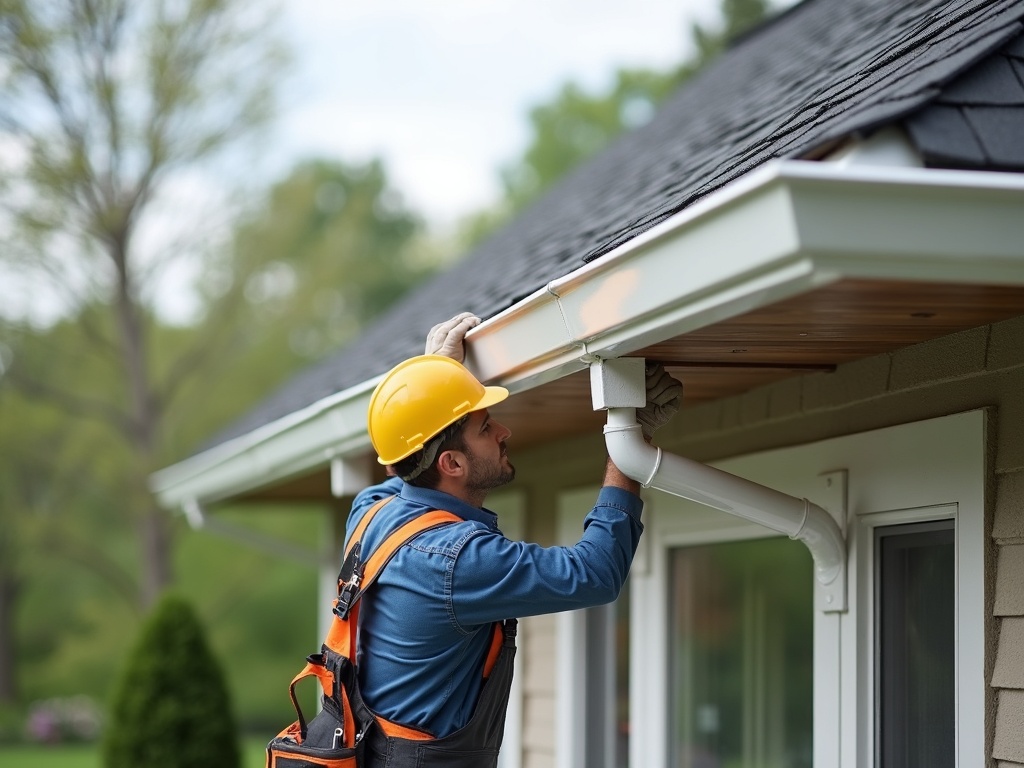
What We Fix in Saratoga Springs
🏠 Soffit Repair & Replacement Loose or missing panels, rotted nailing channels, vented panel upgrades, gap sealing.
🪵 Fascia Board Repair & Capping Rotted board replacement, aluminum fascia wrap to prevent future moisture damage.
🌧️ Gutter Repair & Replacement Re-hang, reseal, section replacement, downspout redirection, full replacement.
🧊 Ice Dam Damage Repair Eave damage from freeze-thaw cycling, fascia infiltration, soffit moisture remediation.
🛡️ Gutter Guards Micro-mesh guard installation to reduce cleaning frequency and protect fascia.
🔍 Free Inspection Ladder-level assessment of soffit, fascia, and gutter condition. No charge, no obligation.
Common Questions from Saratoga Springs Homeowners
How serious is water staining near an exterior wall ceiling?
Very — and the stain often appears weeks after the event that caused it. Water entering through the eave from a failing soffit or ice dam infiltration travels along rafter framing before pooling at a low point on the ceiling. By the time the stain is visible, the entry point may have been active for an entire winter season. The inspection starts at the roofline and traces back to the source.
Can soffit and fascia work be done in winter?
In New York, winter repairs are possible in mild windows but most contractors prefer above-freezing temperatures for proper material setting and safe ladder work. Spring (March–May) is the ideal window — winter damage is fully visible, work schedules are still available, and the repair is completed before summer humidity season starts. Emergency repairs in winter are handled case-by-case.
How much does aluminum fascia wrap cost?
Aluminum fascia capping (wrapping existing wood fascia with aluminum coil stock) typically adds $8–$18 per linear foot in New York. It eliminates the repainting cycle, protects the wood from direct moisture contact, and lasts significantly longer than paint in NY's climate. Most contractors recommend it when replacing fascia sections on homes where the surrounding boards are still structurally sound.
Will animals enter through a damaged soffit in New York?
Yes — squirrels, starlings, and occasional raccoons use any opening in a soffit system as an attic access point. A gap the diameter of a quarter is enough for a gray squirrel. Once inside, animals damage insulation, create secondary entry points, and generate noise that's detectable in the eave area during early morning hours. Any open soffit gap should be treated as an animal exclusion concern, not just a cosmetic issue.
My soffit looks fine from the ground. Do I still need an inspection?
Yes, if you've noticed other warning signs: gutters overflowing, staining near exterior walls, or sounds from the eaves. Soffit and fascia deterioration in New York's climate often looks fine from ground level until a section detaches or an animal entry opens up. The inspection from the ladder costs nothing and takes 20 minutes. It's the only reliable way to know the actual condition.