Soffit, Fascia & Gutter Repair in Cheektowaga
Cheektowaga's development boom after World War II created the dense suburban grid that most residents know today. The homes built in those years — predominantly single-story ranches and Cape Cods on the streets east of Buffalo — were constructed with materials and techniques that assumed the homeowner would paint and maintain them on a regular schedule. When that maintenance cycle breaks down, as it reliably does on aging properties, Buffalo's lake-effect winters do the rest. The combination of heavy snowfall, ice dam formation, and humidity from Lake Erie creates deterioration that moves faster than in landlocked communities.
Many Cheektowaga homeowners discover the extent of their soffit and fascia problem only when the gutter pulls away from the house — an event that often happens mid-season, during a thaw, when the weight of ice in the gutter overcomes the last grip the rotted fascia board had on the screw. At that point, the repair involves both the gutter rehang and the fascia section it pulled away from. The inspection before that happens costs nothing.
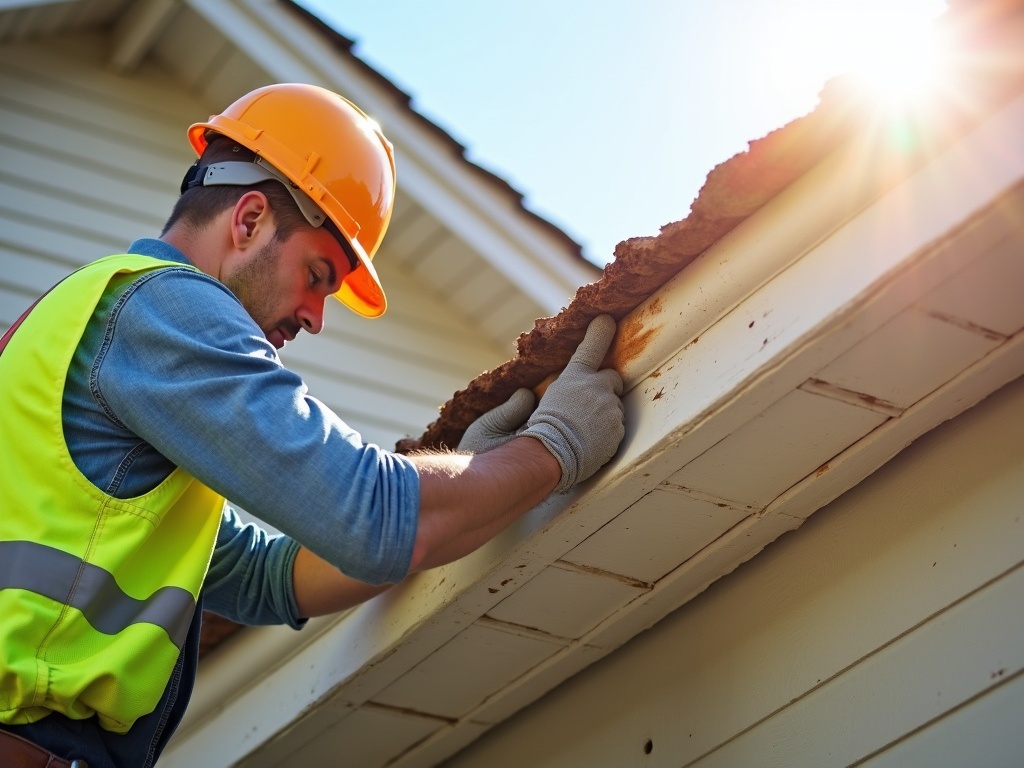
What Fails First on Cheektowaga Homes
Cheektowaga is mostly single-story ranches and Cape Cods built between 1945 and 1965, trimmed for easy paint maintenance and now 60-plus winters old. They fail in a consistent order.
- Gutters pulled off by the weight of ice
This is how most Cheektowaga homeowners find out. During a mid-winter thaw, a gutter full of ice overcomes the last grip a rotted fascia board had on the screw and drops. The gutter is the visible failure, but the fascia behind it went soft seasons earlier.
- Fascia and soffit that lost its paint cycle
Postwar trim was built assuming regular repainting. Once that stopped, usually decades ago, moisture got into every seam. Bare or peeling wood fascia and plywood or wood soffit on a ranch is typically soft along the lower edge first, where water sits against it.
- Blocked soffit vents from added insulation
Many Cheektowaga attics were topped up with blown-in insulation over the years, and it often ends up packed against or over the soffit vents. With no airflow, the roof deck stays warm, snow melts unevenly, and the eave refreezes. That cycle is what feeds ice dams on a low-slope ranch roof.
- Shallow overhangs and low roof pitch
Ranches have modest overhangs and a gentle pitch that holds snow rather than shedding it. The gutter sits close to the wall, so meltwater and ice have little room to go and push back toward the fascia and the top of the siding.
Soffit & Fascia Repair Cost in Cheektowaga
The typical Cheektowaga house is a single-story ranch or Cape of 1,000 to 1,600 square feet with 140 to 190 linear feet of roofline. Low eaves keep access simple and costs lower than on a two-story. These are installed prices, including tear-off and disposal.
| Job | Typical Range | What it covers |
|---|---|---|
| Soffit repair | $325–$1,000 | Loose or missing panels, a section of damaged soffit, clearing and restoring vent openings |
| Fascia replacement (one elevation) | $1,400–$3,800 | New board along the front or one side of a ranch, gutter re-hung |
| Aluminum fascia capping | $9–$18 per linear foot | Formed aluminum over new or sound wood; about $1,300–$3,300 for a typical ranch |
| Full soffit and fascia replacement | $4,000–$9,000 | Whole roofline in one visit, with vented soffit |
A single story keeps most Cheektowaga jobs on the lower half of the statewide ranges. Capes with dormers and houses with long gable runs cost more. The free inspection gives you a written number. See the statewide cost guide for context.
How Cheektowaga Roofline Damage Differs from the Rest of New York
Cheektowaga gets the same lake-effect snow as Buffalo, but its housing is different, and that changes how the damage shows up. Buffalo's tall doubles lose trim to height, wind, and access problems. Cheektowaga's ranches lose it to snow that sits on a low roof, to blocked ventilation, and to decades of skipped maintenance.
The upside is that the fixes are usually straightforward. A single-story ranch with sound framing behind the fascia is a one-day job on most elevations, and replacement with aluminum or vented soffit lasts for decades.
Fixing the Cause: Ventilation, Insulation and Ice Dams
On a typical Cheektowaga ranch, a new fascia board without better attic airflow is a short-term fix. If insulation is blocking the soffit vents or heat is leaking into the roof space, the same eave will ice up again next winter and the new trim will start taking the same water.
That's why our inspection includes a look at the attic side of the soffit where we can reach it. Replacing a blocked soffit with vented panels, and adding baffles where insulation sits, is a small cost on top of the repair and the most reliable way to stop the repeat damage.
What We Fix in Cheektowaga
Loose or missing panels, rotted nailing channels, vented panel upgrades, gap sealing.
Rotted board replacement, aluminum fascia wrap to prevent future moisture damage.
Re-hang, reseal, section replacement, downspout redirection, full replacement.
Eave damage from freeze-thaw cycling, fascia infiltration, soffit moisture remediation.
Micro-mesh guard installation to reduce cleaning frequency and protect fascia.
Ladder-level assessment of soffit, fascia, and gutter condition. No charge, no obligation.