Soffit, Fascia & Gutter Repair in Massapequa Park
Massapequa Park is an incorporated village on Nassau County's South Shore, set between Sunrise Highway and Merrick Road with its own LIRR station and its own village government. Its housing stock is weighted heavily toward the post-war building boom — Capes, ranches, and split-levels put up through the late 1940s and 1950s — layered over an older core of 1920s and 1930s Tudors and colonials near the original village center. Homes from both eras went up with wood soffit and fascia, and after seven decades of South Shore weather those original boards are well past any reasonable service life.
Sitting a short distance off South Oyster Bay, the village catches enough salt-carrying air to matter. Salt holds moisture against exterior wood long after the rain stops, and it corrodes the nails, hangers, and spikes holding the whole roofline assembly together — so the fasteners often fail before the lumber does. Where boards have rotted past patching, our soffit and fascia replacement rebuilds the roofline in sealed aluminum that shrugs off salt air.
A Massapequa Park inspection usually turns up more than the homeowner expected. Fascia that reads as merely tired from the driveway is frequently soft behind the gutter line, where years of overflow have been soaking the board from the back. Soffit Fascia Guys provides a free, no-obligation ladder inspection across Nassau County, so you see the actual condition — and the actual scope — before committing to anything.
When rotted fascia has let the gutters sag away from the roofline, our gutter repair re-establishes proper drainage once there is solid board behind it to fasten to. Wrapping the restored fascia in aluminum fascia capping then seals the wood off from salt and moisture for good, ending the repainting cycle these village homes have been on for decades. Neighboring Massapequa homes show the same failure pattern on the same timeline.
The post-war Cape is the specific problem house in Massapequa Park, and the reason is geometry. Capes were built with short eave overhangs — often only eight to twelve inches — which leaves the fascia board taking rain almost directly off the roof edge with very little shelter above it. Add a gutter that has begun to overflow and the board is effectively getting soaked from both faces at once. The shed dormers that so many of these homes picked up in later decades add another vulnerable seam, because the junction where a dormer meets the original eave is a spot where flashing and fascia rarely stay watertight across forty years of freeze-thaw movement.
The other pattern worth knowing is ventilation. A great many Massapequa Park Capes had their attics finished into bedrooms at some point, and the insulation that came with that work frequently ended up packed tight against the underside of the roof deck — blocking the soffit vents entirely. With intake airflow cut off, moisture from inside the house condenses at the eaves through the winter and rots the soffit from the back side, where no amount of exterior inspection will reveal it. If your upstairs rooms run hot in summer and your soffit panels are stained or sagging, our soffit ventilation installation addresses the cause rather than the symptom, and our soffit installation replaces the failed panels in vented aluminum.
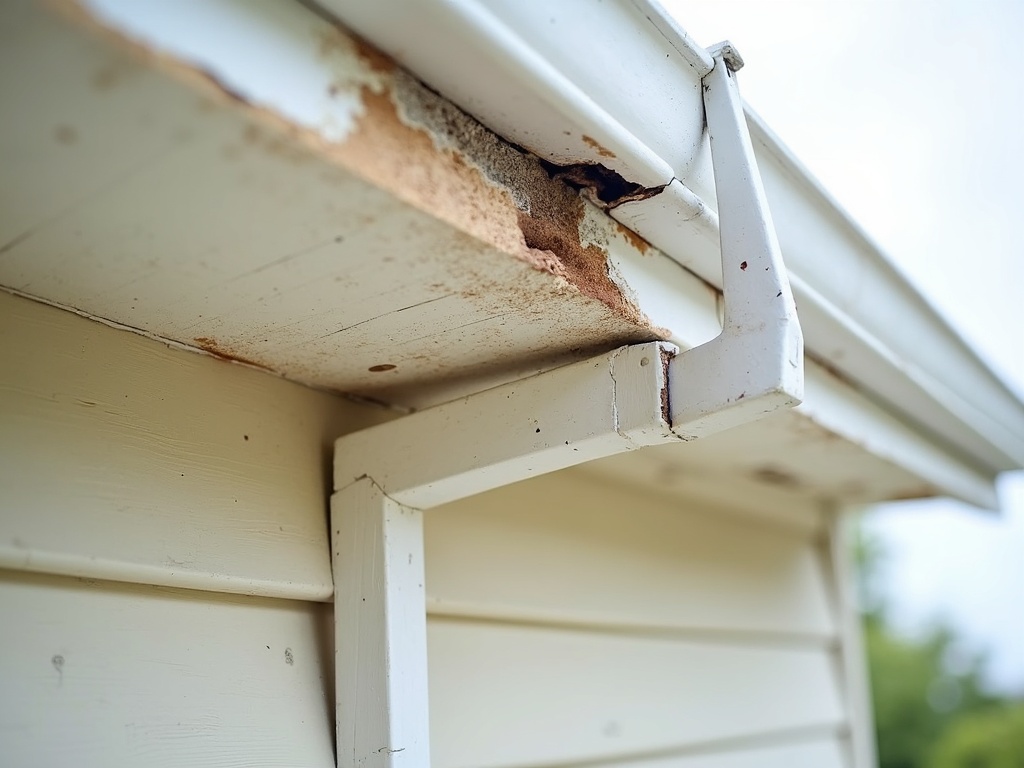
What Fails First on Massapequa Park Homes
Massapequa Park is a village of postwar Capes and ranches layered over an older core of 1920s and 1930s homes, a short distance from South Oyster Bay.
- Short Cape overhangs
Capes were built with overhangs of eight to twelve inches, so the fascia takes rain almost directly off the roof edge. A gutter that overflows soaks it from both faces.
- Dormer-to-eave junctions
Shed dormers added in later decades create seams where flashing and fascia rarely stay watertight through decades of freeze-thaw movement.
- Corroded nails, hangers and spikes
Salt carried on the air corrodes the fasteners that hold the roofline together, so they often fail before the lumber does.
- Soffit vents blocked by attic conversions
Finished attics often have insulation packed against the roof deck, blocking intake. Moisture then condenses at the eaves and rots the soffit from behind.
Soffit & Fascia Repair Cost in Massapequa Park
Massapequa Park homes are mostly 1,000 to 1,800 square feet, with 130 to 210 linear feet of roofline. Nassau labor rates apply. Prices are installed, including tear-off and disposal.
| Job | Typical Range | What it covers |
|---|---|---|
| Soffit repair | $450–$1,400 | Loose panels, rotted channel sections, resealed returns |
| Fascia replacement (one elevation) | $2,100–$5,200 | New board along one side, gutter re-hung |
| Aluminum fascia capping | $11–$24 per linear foot | Formed aluminum over sound wood; about $1,800–$4,500 for a typical home |
| Full soffit and fascia replacement | $5,200–$11,500 | Whole roofline in one visit, with vented soffit |
Opening up blocked soffit vents is usually part of the same visit. See the statewide cost guide for baseline numbers.
How Massapequa Park Roofline Damage Differs from the Rest of New York
Massapequa Park sits close enough to the bay to catch salt, but its biggest roofline factor is the house design. Short overhangs put the fascia in the line of fire in a way a deeper eave doesn't.
So the damage is as much about geometry as climate, and it follows the Cape's shape.
Hot Upstairs Rooms and Stained Soffit: A Pair Worth Noticing
If the upstairs runs hot in summer and the soffit is stained or sagging, the two may be connected. Blocked intake vents trap heat and moisture in the attic.
Our inspection looks at both, so the repair fixes the cause and not just the symptom.
What We Fix in Massapequa Park
Loose or missing panels, rotted nailing channels, vented panel upgrades, gap sealing.
Rotted board replacement, aluminum fascia wrap to prevent future moisture damage.
Re-hang, reseal, section replacement, downspout redirection, full replacement.
Eave damage from freeze-thaw cycling, fascia infiltration, soffit moisture remediation.
Micro-mesh guard installation to reduce cleaning frequency and protect fascia.
Ladder-level assessment of soffit, fascia, and gutter condition. No charge, no obligation.