Soffit, Fascia & Gutter Repair in Tarrytown
Tarrytown's residential geography splits roughly between the older and more architecturally significant structures along the Hudson bluffs — where the estates of the Gilded Age still define the character — and the mid-century commuter housing in the residential neighborhoods east of Broadway. The estates along the river have original or antique-replacement roofline materials that require specialist knowledge for matching and repair. The postwar housing stock has aluminum soffit panels that are now at the age where nailing channel replacement is typically required alongside any panel repair.
Tarrytown's Hudson River location adds the same moisture dynamic that affects all of the river towns: constant water vapor from the wide Hudson, temperature inversions in fall that keep the riverside neighborhoods significantly more humid than the Westchester interior, and the periodic high winds from the river valley that drive rain into eave sections at angles that don't occur in landlocked communities. These conditions accelerate the timeline on any deteriorating roofline material, whether it's 19th century wood or 1960s aluminum.
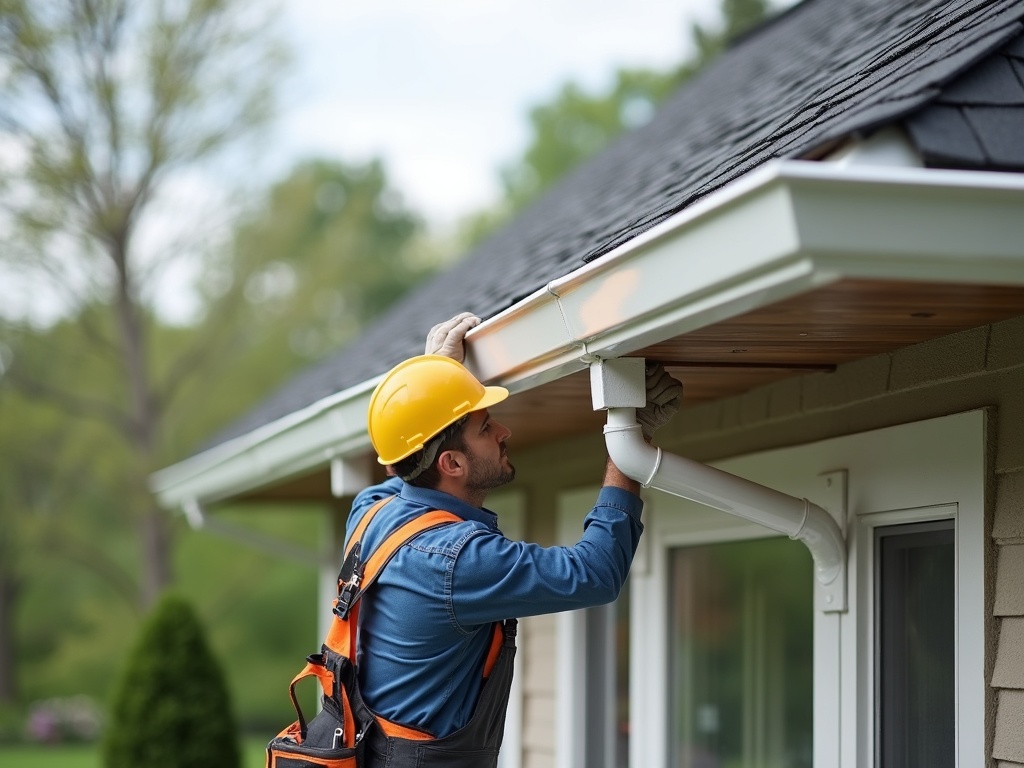
What Fails First on Tarrytown Homes
Tarrytown has Gilded Age estates on the bluffs and postwar commuter housing east of Broadway. They fail differently, but the Hudson shapes both.
- Original or antique-replacement trim on estates
The big river homes have roofline materials that can't be matched from stock. Repair means specialist sourcing, and delay increases both the scope and the difficulty.
- Aluminum soffit and failing channels on postwar homes
On the mid-century housing, aluminum panels are now at the age where the nailing channel behind them needs replacing along with any panel repair.
- Riverside eaves under constant vapor
Temperature inversions in fall keep riverside neighborhoods much more humid than interior Westchester. Eaves there stay damp longer and deteriorate faster.
- Wind-driven rain from the river valley
Winds funneling along the valley drive rain into eave sections at angles landlocked towns don't see. Open joints take water in.
Soffit & Fascia Repair Cost in Tarrytown
Tarrytown homes range from compact commuter houses to large estates, with 150 to 400 linear feet of roofline. Westchester labor rates apply, and estate work often requires specialty access and matching. Prices are installed, including tear-off and disposal.
| Job | Typical Range | What it covers |
|---|---|---|
| Soffit repair | $450–$1,500 | Loose panels, channel replacement, resealed returns |
| Fascia replacement (one elevation) | $2,300–$6,500 | New board along one side; estate profiles run higher |
| Aluminum fascia capping | $11–$26 per linear foot | Formed aluminum over new or sound wood; about $2,200–$6,000 for a typical home |
| Full soffit and fascia replacement | $5,800–$14,000 | Whole roofline in one visit; large estates can exceed this |
Estate-scale and custom-match work is quoted after a site visit. See the statewide cost guide for baseline numbers.
How Tarrytown Roofline Damage Differs from the Rest of New York
Tarrytown's two housing types sit a short distance apart and need different solutions. Bluff estates need specialist matching, while commuter housing needs channel replacement and new panels.
The river is the common factor. It adds humidity and wind that interior towns don't get, and it speeds up deterioration regardless of material.
Estates and Commuter Homes: Different Jobs, Same Inspection
For an estate, we assess what can be repaired in kind and what must be replaced and matched. For a commuter home, we check the channels and fasteners behind the panels as well as the panels themselves.
Either way, the free inspection gives a written scope you can use to plan and budget the work.
What We Fix in Tarrytown
Loose or missing panels, rotted nailing channels, vented panel upgrades, gap sealing.
Rotted board replacement, aluminum fascia wrap to prevent future moisture damage.
Re-hang, reseal, section replacement, downspout redirection, full replacement.
Eave damage from freeze-thaw cycling, fascia infiltration, soffit moisture remediation.
Micro-mesh guard installation to reduce cleaning frequency and protect fascia.
Ladder-level assessment of soffit, fascia, and gutter condition. No charge, no obligation.