Soffit, Fascia & Gutter Repair in Bay Shore
Bay Shore sits on the western shore of Great South Bay, where salt-laden coastal air reaches the residential neighborhoods of Fifth Avenue and Pine Street through every nor'easter and onshore breeze. The South Shore's postwar housing stock — much of it built in the 1950s and early 1960s — is now at an age where original soffit channels, fascia boards, and gutter hangers are failing together. Salt-air oxidation accelerates this process compared to inland communities of the same vintage.
The pattern in Bay Shore inspections is consistent: homeowners notice the gutters sagging or a soffit panel coming loose, assume it's a minor repair, and discover during the estimate that the fascia behind the gutter line has been corroding for years. On South Shore homes, it's rarely just one panel. The free inspection is the only reliable way to know the actual scope before you make repair decisions. Before you book one, our spring soffit and fascia inspection guide covers what a Bay Shore homeowner can check safely from the ground.
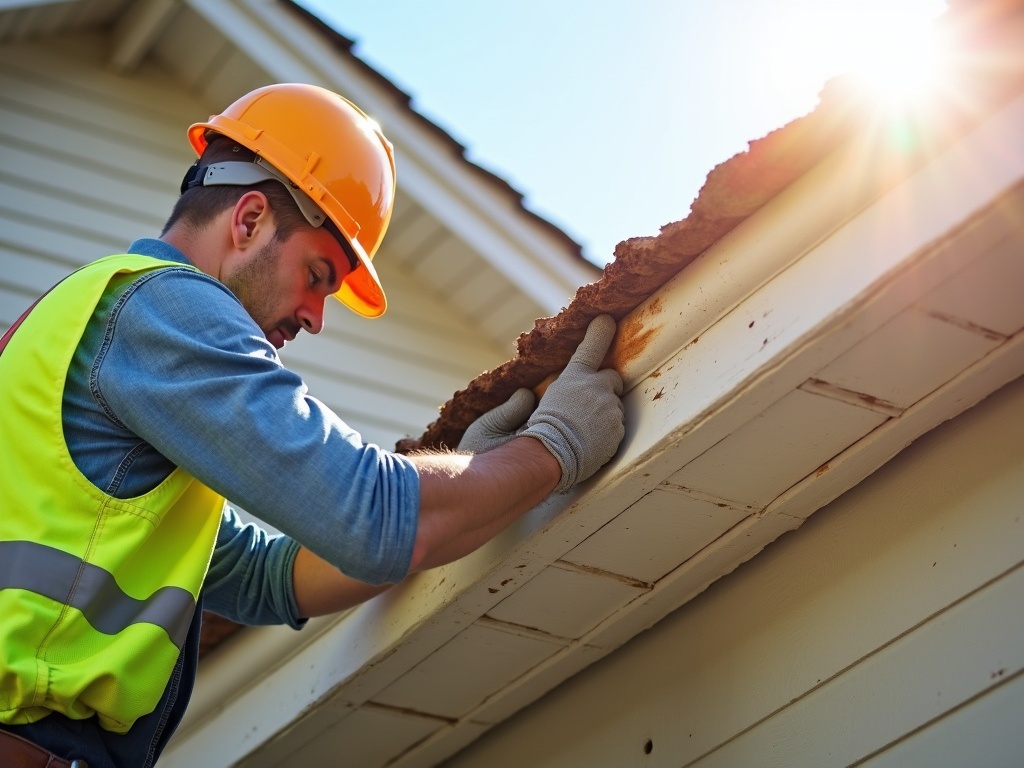
What Fails First on Bay Shore Homes
Bay Shore's homes were built in a hurry after the war and then lived in for 60-plus years of salt air, wind-driven rain, and a lot of cosmetic updates. Here is what usually gives out first.
- Aluminum seams and fasteners corroding in salt air
Aluminum resists rust but not salt-driven pitting, and steel nails and screws used with it corrode and weep. Gutter seams, end caps, and fascia cover joints are the first places the coating breaks down on Great South Bay homes. Streaks below a fastener are the early sign.
- Rot hidden behind 1980s aluminum wrap
Many South Shore homes had their wood trim wrapped in aluminum in the 1980s to avoid painting. It worked for a while, but a gap at the wrap lets water in with no way out, and the wood underneath rots unseen. We often pull a cover and find a board that's mostly crumbs.
- Dormers and additions on Capes and ranches
Bay Shore's Capes and ranches have been expanded for decades with dormers, bump-outs, and second-story additions. The returns and valley edges on those additions get less attention than the original eave and are where nor'easter rain finds its way behind trim.
- Soffit with little ventilation
Original soffit on 1950s and 1960s homes is often solid or barely vented. Humid coastal air sits in the attic and condenses on cool surfaces, so the underside of the soffit and the fascia back stay damp. Adding vented soffit during repair is one of the cheaper long-term fixes.
Soffit & Fascia Repair Cost in Bay Shore
Bay Shore is a Long Island market, so labor and permit-adjacent costs run above upstate. The typical house here is a 1,200 to 2,000 square foot Cape or ranch with 150 to 220 linear feet of roofline. These are installed prices, including tear-off and disposal.
| Job | Typical Range | What it covers |
|---|---|---|
| Soffit repair | $450–$1,400 | Loose or missing panels, a few feet of damaged soffit, resealed returns |
| Fascia replacement (one elevation) | $2,200–$5,500 | New board along the front or one side of a two-story, gutter re-hung |
| Aluminum fascia capping | $11–$24 per linear foot | Formed aluminum over new or sound wood; about $2,000–$4,800 for a typical Cape or ranch |
| Full soffit and fascia replacement | $5,500–$12,000 | Whole roofline in one visit, with vented soffit |
Removing old aluminum wrap and finding rot underneath is the most common reason a Bay Shore job comes in above its first range, so the inspection includes opening a section where we can. See the statewide cost guide for how these numbers compare.
How Bay Shore Roofline Damage Differs from the Rest of New York
Upstate roofline damage is mostly about snow and ice. Bay Shore's is about moisture and salt, and it happens slowly. Winters on the South Shore are milder, so ice dams are less of a driver, but humid bay air and wind-driven rain keep trim damp for much of the year. The result is corrosion and rot that builds quietly rather than failing in one bad storm.
That slow pace is deceptive. A Bay Shore home can look fine for years and then need a lot of work at once, because every part of the roofline was weathering at the same rate.
Nor'easters, Wind and Material Choice on the South Shore
Northeast-facing eaves take the worst of a nor'easter, and Great South Bay storms can drive rain sideways into any small gap. On this coast, details matter more than the material alone: tight joints, sealed returns, and corrosion-resistant fasteners do more to extend the life of a roofline than upgrading panel thickness.
When we replace a roofline in Bay Shore, we generally recommend aluminum or PVC trim with stainless or coated fasteners, since both handle salt better than bare wood. Where the original wood is sound, capping it in aluminum is a lower-cost way to stop the paint cycle.
What We Fix in Bay Shore
Loose or missing panels, rotted nailing channels, vented panel upgrades, gap sealing.
Rotted board replacement, aluminum fascia wrap to prevent future moisture damage.
Re-hang, reseal, section replacement, downspout redirection, full replacement.
Eave damage from freeze-thaw cycling, fascia infiltration, soffit moisture remediation.
Micro-mesh guard installation to reduce cleaning frequency and protect fascia.
Ladder-level assessment of soffit, fascia, and gutter condition. No charge, no obligation.