Soffit, Fascia & Gutter Repair in Huntington
Huntington's housing stock spans from colonial-era structures near the village green to postwar developments in Huntington Station and mid-century homes in the South Greenlawn corridor. Homes near Cold Spring Harbor and Lloyd Neck face a particular salt-air and humidity exposure that accelerates exterior material deterioration compared to the interior of Long Island. The North Shore's nor'easters hit this coastline at an angle that drives rain into eave cavities that face northeast — exactly the direction most homes present to the dominant storm track.
Huntington Village's architectural preservation standards create a secondary consideration for repairs in the historic districts: replacement soffit and fascia must match the existing profile, and original wood on pre-1940 structures requires a different repair approach than aluminum replacement on a 1960s ranch. The free inspection determines the scope and the right material approach before any work is scheduled. Homeowners who want to assess their own roofline first can work through our spring roofline inspection checklist.
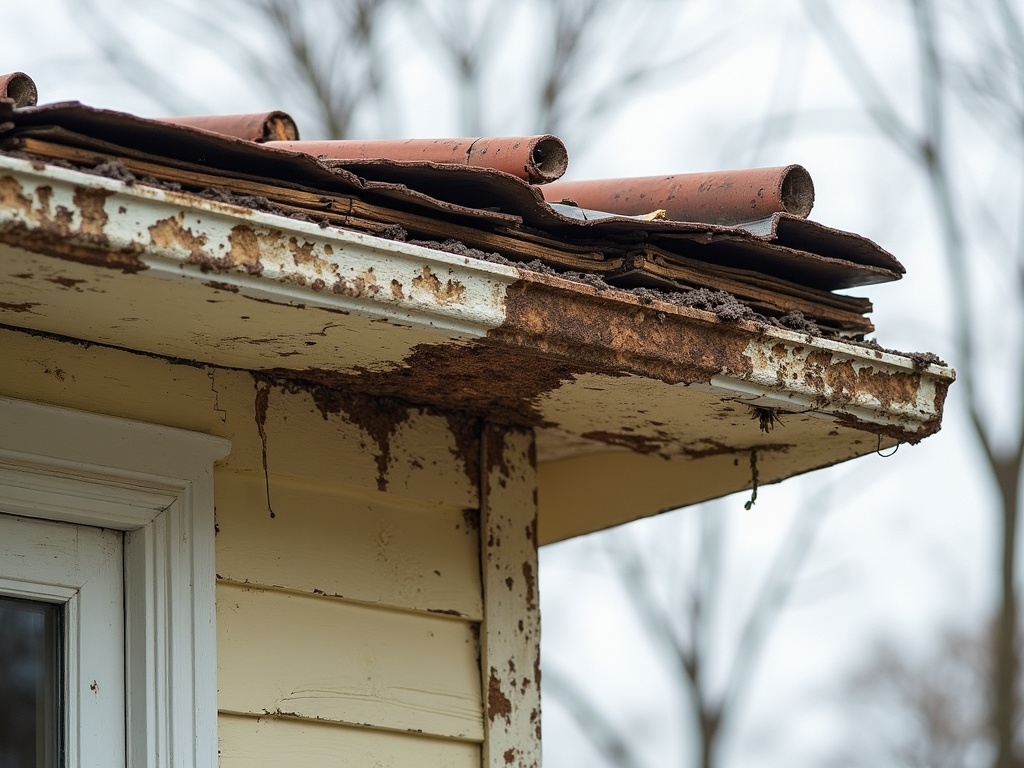
What Fails First on Huntington Homes
Huntington's housing runs from colonials near the village green to 1950s and 1960s ranches in Huntington Station and Greenlawn, with a lot of hillside and waterfront lots. What fails first depends on the era and the exposure.
- Northeast-facing eaves hit by nor'easter rain
Storms on this coast arrive from the northeast, and most North Shore homes present an eave to that direction. Wind-driven rain gets into soffit and fascia joints on that side first, and the wood stays wet after the storm passes.
- Original wood trim on pre-1940 homes
Older colonials and Victorians near the village have profiled wood soffit and fascia that has been painted many times. The paint film is thick, which hides rot underneath, and the profiles can't be replaced with a standard panel.
- Aluminum and fasteners near Cold Spring Harbor and Lloyd Neck
Within a mile or so of the harbor, salt and humidity accelerate corrosion on aluminum seams and steel fasteners. Streaking below nails, white powder on metal, and open end caps are early signs.
- Tall rear elevations on sloped lots
Many Huntington homes sit on hills, so the back is a story or more taller than the front. Those long, high eaves are harder to see and harder to maintain, and the fascia and gutters there are often neglected longest.
Soffit & Fascia Repair Cost in Huntington
Huntington homes range from modest ranches to large colonials, with 150 to 300 linear feet of roofline and frequent access challenges on hillside lots. Long Island North Shore labor rates apply. Prices are installed, including tear-off and disposal.
| Job | Typical Range | What it covers |
|---|---|---|
| Soffit repair | $450–$1,500 | Loose or missing panels, rotted channel, resealed returns on the exposed side |
| Fascia replacement (one elevation) | $2,400–$6,500 | New board along one side; tall or hillside elevations run toward the top |
| Aluminum fascia capping | $12–$26 per linear foot | Formed aluminum over new or sound wood; about $2,200–$6,000 for a typical house |
| Full soffit and fascia replacement | $6,000–$14,000 | Whole roofline in one visit; larger colonials can exceed this range |
Historic-district homes need profile matching, which takes more labor, and we price that after seeing the trim. See the statewide cost guide for baseline numbers.
How Huntington Roofline Damage Differs from the Rest of New York
Huntington's difference is exposure. Where much of Long Island is flat and open, the North Shore has bluffs, harbors, hills, and tall trees, so two homes a few blocks apart can face very different weather. A house on a harbor-facing slope sees salt and wind. One tucked behind trees stays damp and shaded.
That variety is why we judge roofline condition house by house. A general rule for Huntington would be wrong for half the homes it covered.
Historic Districts, Profile Matching and Material Choice
In Huntington's historic areas, replacement trim has to respect the existing profile, and original wood on older structures calls for a different approach than aluminum on a 1960s ranch. The first decision is whether the original can be repaired in kind or has to be replaced and matched.
We tell you at the free inspection which parts of your roofline are worth preserving and which are past saving, and what each path costs. For newer homes, we recommend corrosion-resistant fasteners and aluminum or PVC trim near the water.
What We Fix in Huntington
Loose or missing panels, rotted nailing channels, vented panel upgrades, gap sealing.
Rotted board replacement, aluminum fascia wrap to prevent future moisture damage.
Re-hang, reseal, section replacement, downspout redirection, full replacement.
Eave damage from freeze-thaw cycling, fascia infiltration, soffit moisture remediation.
Micro-mesh guard installation to reduce cleaning frequency and protect fascia.
Ladder-level assessment of soffit, fascia, and gutter condition. No charge, no obligation.