Soffit, Fascia & Gutter Repair in Patchogue
Patchogue's village core has one of the most architecturally varied housing stocks on the South Shore, ranging from Victorian-era structures near the Main Street waterfront to mid-century residential development east of the commercial district and the newer construction south toward the bay. Homes within a few blocks of the bay or the river wetlands face persistent moisture exposure that accelerates wood rot and joint failure compared to the same construction type six miles inland. The Fire Island ferry terminal proximity means the area sees nor'easter surge and sea spray that standard inland locations never experience.
Patchogue inspections frequently uncover a condition specific to waterfront-adjacent properties: the soffit panels on the bay-facing side of the home are visually intact but have lost their structural integrity from sustained moisture contact. They hold shape until disturbed, then separate from the nailing channel. Replacing them is straightforward, but the inspection from the ladder is what identifies this condition — it's not visible from the ground. Our spring soffit and fascia inspection guide explains which findings you can spot yourself and which ones need the ladder.
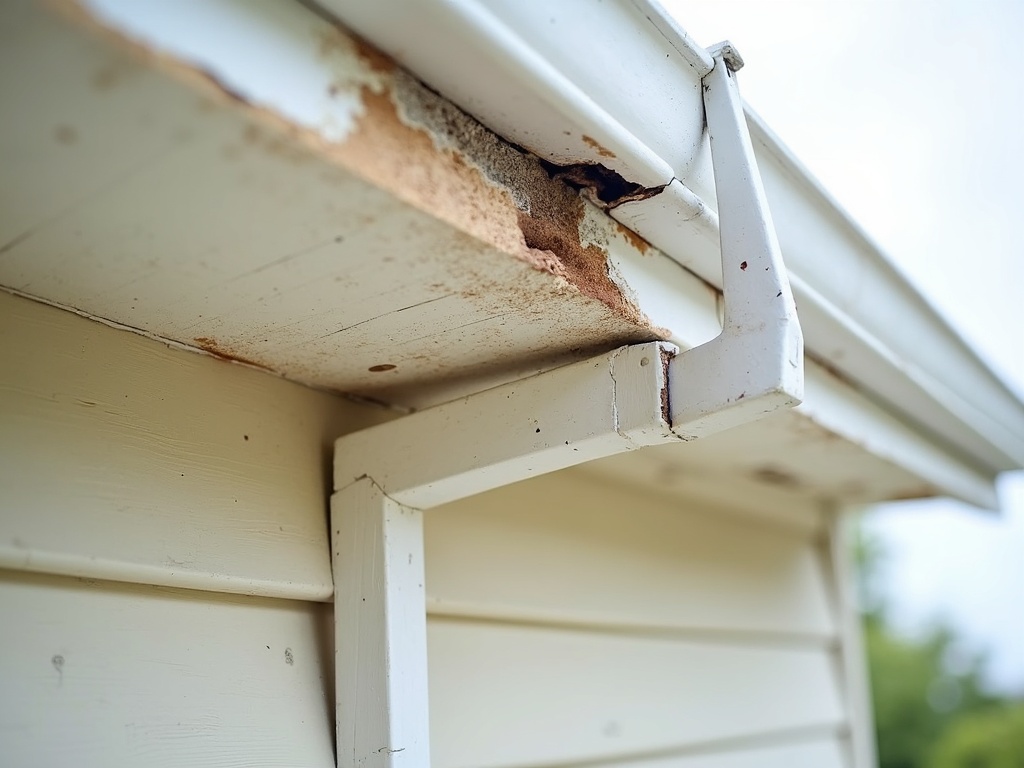
What Fails First on Patchogue Homes
Patchogue has Victorian homes near the Main Street waterfront, mid-century houses east of the village, and newer construction toward the bay. Bay and river humidity affect all of it.
- Bay-facing soffit that looks fine but has lost strength
Panels on the bay side hold their shape until disturbed, then separate from the channel. Sustained moisture has weakened them from inside, and it can't be seen from the ground.
- Never-capped wood trim on Victorian homes
Older homes near the waterfront often still have bare wood fascia and soffit. Paint is the only protection, and in this humidity it fails earlier than inland.
- Fascia exposed to Carmans River wetland humidity
Homes within a few blocks of the river wetlands stay damp. Wood rots faster than on the same construction six miles inland.
- Fasteners and aluminum near the water
Salt spray and surge from nor'easters corrode seams and steel fasteners. Streaks and loose end caps are early signs.
Soffit & Fascia Repair Cost in Patchogue
Patchogue homes range from compact village houses to larger bay-side properties, with 140 to 260 linear feet of roofline. Long Island labor rates apply. Prices are installed, including tear-off and disposal.
| Job | Typical Range | What it covers |
|---|---|---|
| Soffit repair | $450–$1,400 | Loose panels, weakened bay-side sections, resealed returns |
| Fascia replacement (one elevation) | $2,200–$5,400 | New board along one side, gutter re-hung |
| Aluminum fascia capping | $11–$24 per linear foot | Formed aluminum over new or sound wood; about $1,900–$4,800 for a typical house |
| Full soffit and fascia replacement | $5,400–$11,800 | Whole roofline in one visit, with corrosion-resistant fasteners |
Victorian trim near the waterfront is priced after we see it. See the statewide cost guide for baseline numbers.
How Patchogue Roofline Damage Differs from the Rest of New York
Patchogue sits where the village meets both the bay and the river wetlands. That produces persistent ground-level humidity, and it's the dampness that does most of the damage, more than any single storm or snow.
The damage hides. Panels and boards keep their shape and paint while losing strength, so a ladder inspection finds problems a ground-level look misses.
Waterfront Exposure and What Holds Up
Near the bay, what holds up is material that doesn't rely on paint: aluminum and PVC trim with sealed joints and corrosion-resistant fasteners. Bare wood needs more frequent attention than most homeowners give it.
For Victorian homes, we assess whether original trim is worth keeping, and where it isn't, we replace and cap it to end the repaint cycle.
What We Fix in Patchogue
Loose or missing panels, rotted nailing channels, vented panel upgrades, gap sealing.
Rotted board replacement, aluminum fascia wrap to prevent future moisture damage.
Re-hang, reseal, section replacement, downspout redirection, full replacement.
Eave damage from freeze-thaw cycling, fascia infiltration, soffit moisture remediation.
Micro-mesh guard installation to reduce cleaning frequency and protect fascia.
Ladder-level assessment of soffit, fascia, and gutter condition. No charge, no obligation.