Soffit, Fascia & Gutter Repair in Canandaigua
Canandaigua's position at the northern end of Canandaigua Lake places it in a microclimate with both elevated moisture from the lake's evaporation and a winter season that brings reliable cold temperatures and periodic lake-effect influence from Lake Ontario to the north. The village's residential neighborhoods include homes from the early 20th century through the mid-century era, with wood soffit and fascia that absorbs lake-side humidity year-round. In this environment, paint failure on wood soffit is a moisture indicator, not just a cosmetic issue.
Canandaigua homeowners frequently call after noticing that a section of soffit has darkened or developed visible gaps at the corners near the gutter line. Both are signs of moisture that's been working through the material for a season or more. The lake-adjacent location means the repair window matters — any open gap in the soffit system creates a moisture channel that stays active as long as the lake humidity persists.
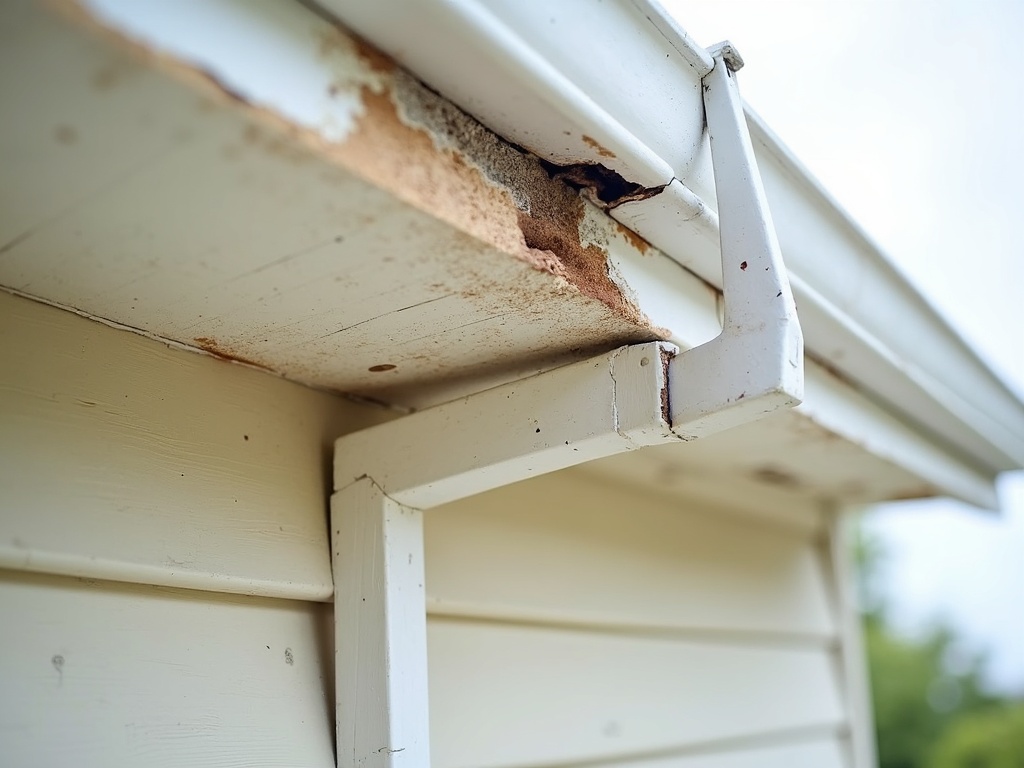
What Fails First on Canandaigua Homes
Canandaigua's homes sit in a lake-influenced microclimate and are built largely of wood. The roofline fails in a pattern shaped by humidity more than by snow.
- Paint failure on wood soffit
Wood soffit absorbs lake-side humidity year-round, so paint blisters and peels before the board does. On this kind of home, peeling at the soffit means moisture is already in the wood. Repainting without fixing the source buys a season or two at most.
- Darkened panels and open corners near the gutter line
Soffit that has darkened or opened at the corners near the gutter has typically been taking water for a year or more. The damage starts at the gutter edge because that's where overflow and ice dam meltwater hit first.
- Converted lakefront cottages with thin roof ventilation
Many older lake houses around Canandaigua Lake started as summer cottages and were later insulated and heated year-round. Roof assemblies that were never designed for winter warmth tend to melt snow unevenly and form ice dams at the eaves, which the original trim was never built to handle.
- Fascia and gutters on wind-exposed lakeside elevations
Lake-facing elevations take wind-driven rain and, in winter, wind-packed snow. Gutters on those sides get pushed and pulled, and fasteners work loose in softening fascia faster than on sheltered sides of the same house.
Soffit & Fascia Repair Cost in Canandaigua
Canandaigua has both modest village homes and larger lake houses, with roofline lengths from about 150 feet to well over 300. Labor runs a bit above the Rochester average because of the mix of lakefront access and larger properties. Prices are installed, including tear-off and disposal.
| Job | Typical Range | What it covers |
|---|---|---|
| Soffit repair | $350–$1,100 | Darkened or loose panels, open corners, a few feet of rotted soffit board |
| Fascia replacement (one elevation) | $1,800–$5,000 | New board along one side; lake-facing elevations and two-story lake houses run higher |
| Aluminum fascia capping | $9–$21 per linear foot | Formed aluminum over new or sound wood; about $1,700–$4,500 for a typical village home |
| Full soffit and fascia replacement | $4,500–$12,000 | Whole roofline in one visit; larger lake houses can exceed the top of this range |
Lakefront properties with steep grades or limited access can add staging costs. We note those at the free inspection. See the statewide cost guide for general context.
How Canandaigua Roofline Damage Differs from the Rest of New York
Most upstate roofline damage is tied to a snowfall number. Canandaigua's is tied to moisture. The lake adds humidity through most of the year, and winters are cold enough for freeze-thaw damage but without the extreme snow belt loading found closer to Lake Ontario. The result is wood that stays damp and slowly fails, rather than a roofline that gets crushed by snow.
That makes prevention more effective here than in snow-belt cities. Keeping joints tight, paint intact, and soffit properly ventilated does a lot of the work.
Lake Houses, Seasonal Conversions and What to Look For
If your Canandaigua home started as a seasonal cottage, the roofline was probably built to a lighter standard than a year-round house. Thin soffit, little ventilation, and open eaves are common, and any of them can cause trouble once the building is heated in winter.
At the inspection we look at both the trim and the ventilation behind it. Often the lasting fix is not just replacing a board but improving airflow so the eave stays cold enough to prevent melt and refreeze. That is the difference between a repair that lasts and one that needs redoing in three winters.
What We Fix in Canandaigua
Loose or missing panels, rotted nailing channels, vented panel upgrades, gap sealing.
Rotted board replacement, aluminum fascia wrap to prevent future moisture damage.
Re-hang, reseal, section replacement, downspout redirection, full replacement.
Eave damage from freeze-thaw cycling, fascia infiltration, soffit moisture remediation.
Micro-mesh guard installation to reduce cleaning frequency and protect fascia.
Ladder-level assessment of soffit, fascia, and gutter condition. No charge, no obligation.