Soffit, Fascia & Gutter Repair in Dix Hills
Dix Hills sits in the wooded interior of the Town of Huntington, known for larger single-family homes on generously sized, heavily treed lots. That mature canopy is the defining roofline factor: oaks and maples drop significant leaf volume every fall, clogging gutters and holding moisture against the fascia, while the same tree cover limits the drying sun that would otherwise keep the wood sound. The housing here spans mid-century construction through more recent custom builds, but even newer Dix Hills homes are not immune — the exposed roofline components weather faster than the protected parts of the exterior.
The larger rooflines common in Dix Hills also mean more linear feet of fascia and more gutter run, which simply gives moisture more joints and seams to exploit over time.
A Dix Hills inspection commonly traces fascia rot directly to gutter overflow — canopy debris blocks the drainage, water backs up behind the board, and the damage builds unseen across several seasons. Soffit Fascia Guys provides a free, on-site inspection throughout Suffolk County that assesses the full roofline and identifies where tree-driven moisture has done its damage.
For heavily wooded Dix Hills properties, pairing fascia work with our gutter guard installation is often the smartest long-term move — it keeps the drainage clear and protects the new fascia from the same overflow cycle that caused the original failure.
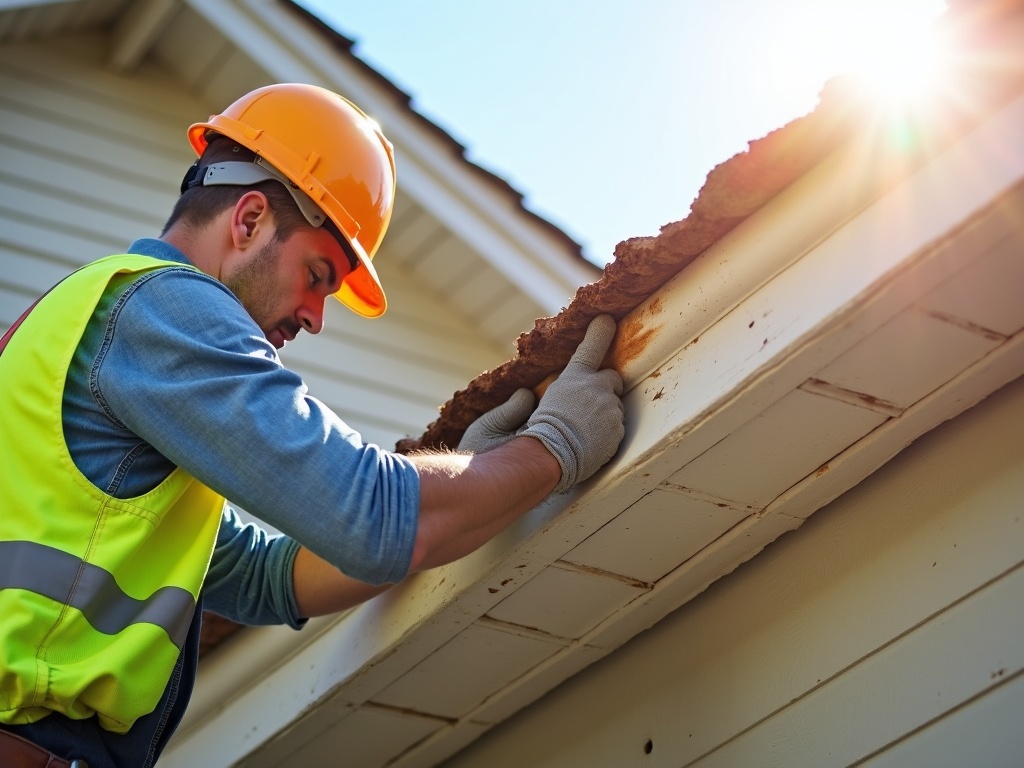
What Fails First on Dix Hills Homes
Dix Hills has larger homes on generous, heavily treed lots. The tree canopy and the length of the roofline are the two things that decide what fails first.
- Fascia rot from gutter overflow
Oak and maple leaves block drainage, water backs up behind the board, and damage builds unseen across several seasons.
- Damp wood in the shade
Tree cover limits the sun that would dry the wood. Fascia and soffit on shaded elevations stay wet longer.
- Long fascia runs with many joints
Larger houses have more linear feet of fascia and gutter. More length means more joints and seams for moisture to exploit.
- Newer custom builds weathering faster than expected
Even newer Dix Hills homes aren't immune. Exposed roofline components weather faster than the protected parts of the exterior.
Soffit & Fascia Repair Cost in Dix Hills
Dix Hills homes are often large, 2,200 to 4,000 square feet, with 220 to 400 linear feet of roofline and high eaves. Long Island labor rates apply. Prices are installed, including tear-off and disposal.
| Job | Typical Range | What it covers |
|---|---|---|
| Soffit repair | $475–$1,500 | Loose panels, damaged boards, resealed returns |
| Fascia replacement (one elevation) | $2,500–$6,500 | New board along one long side; tall elevations run higher |
| Aluminum fascia capping | $12–$26 per linear foot | Formed aluminum over new or sound wood; about $2,800–$7,000 for a typical large home |
| Full soffit and fascia replacement | $6,500–$14,500 | Whole roofline in one visit; larger custom homes can exceed this |
Large homes cost more in total but are in line per foot. See the statewide cost guide for baseline numbers.
How Dix Hills Roofline Damage Differs from the Rest of New York
Dix Hills is wooded, with large lots and larger homes. The leaf load on gutters and the length of the roofline make it different from a compact postwar town, even a few miles away.
The damage here is more about drainage than weather. Blocked gutters cause more fascia failure than the climate does.
Gutter Guards as Part of the Repair
For heavily wooded properties, pairing fascia work with gutter guards keeps the drainage clear and protects the new board from the overflow cycle that caused the failure.
At the inspection, we trace where tree-driven moisture has done its damage, and tell you where guards would help most.
What We Fix in Dix Hills
Loose or missing panels, rotted nailing channels, vented panel upgrades, gap sealing.
Rotted board replacement, aluminum fascia wrap to prevent future moisture damage.
Re-hang, reseal, section replacement, downspout redirection, full replacement.
Eave damage from freeze-thaw cycling, fascia infiltration, soffit moisture remediation.
Micro-mesh guard installation to reduce cleaning frequency and protect fascia.
Ladder-level assessment of soffit, fascia, and gutter condition. No charge, no obligation.